Sulfate-Free Shampoo: What It Actually Changes
Sulfates clean deep but strip the scalp. Here is what a sulfate-free shampoo actually does differently.
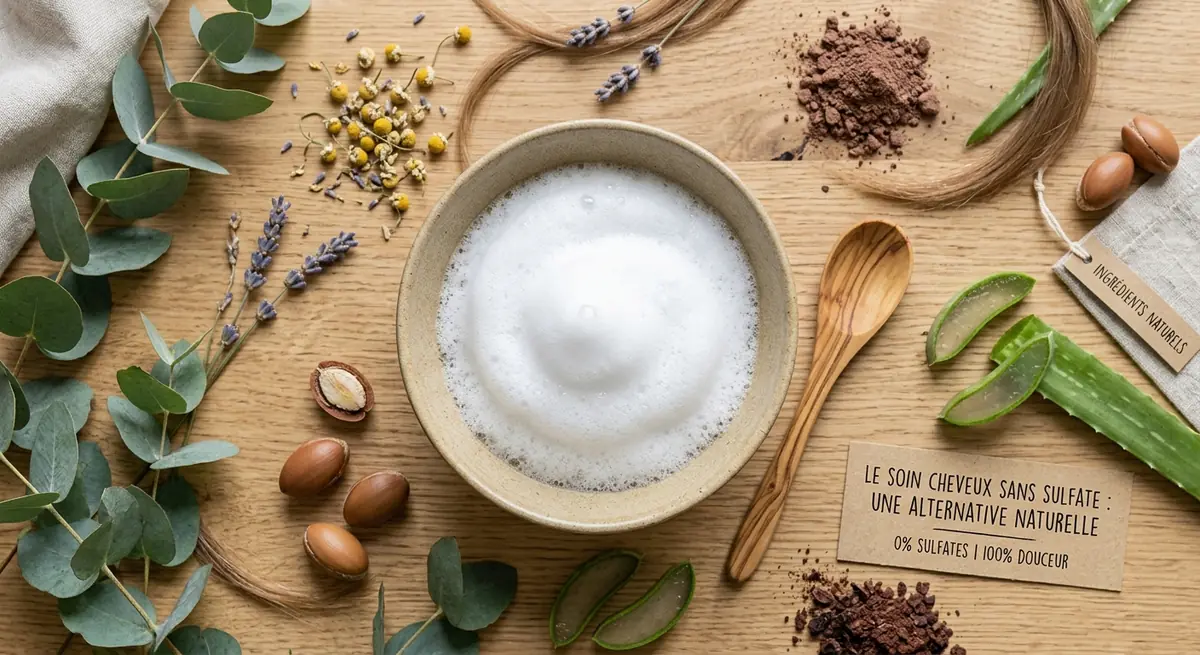
A sulfate-free shampoo cleans while keeping the scalp's natural oils: less dryness, more supple hair, a calmer scalp and colour that lasts longer. In exchange it lathers far less, and the scalp needs about two weeks to settle into its new balance.
Sulfates are what create the rich lather in most shop-bought shampoos. They clean deeply, but they also strip away the natural oils that protect the scalp, leaving hair dry and the scalp irritated with repeated use.
Who sulfate-free is for
- Dry hair that loses its shine soon after washing.
- Curly or wavy hair, which needs its natural oils to stay supple.
- A sensitive scalp that turns red or itchy after a regular shampoo.
- Coloured hair, because sulfates make colour fade faster.
Does it really clean without much lather?
Yes. A rich lather is a visual impression more than a real sign of cleanliness. A sulfate-free shampoo cleans hair and scalp effectively, just gently, and it may need a little more product or two light washes instead of one harsh one.
Gentler cleansing means a less irritated scalp, not a less clean one.
What to expect after switching
For the first two weeks, hair may feel a little heavier while the scalp rebalances its natural production. After that, it gradually becomes lighter and shinier.
Femina Skin's sulfate-free shampoo comes in two fragrances, aloe vera and sweet almond or orange blossom, for a wash that respects a sensitive scalp and dry hair without stripping their oils.
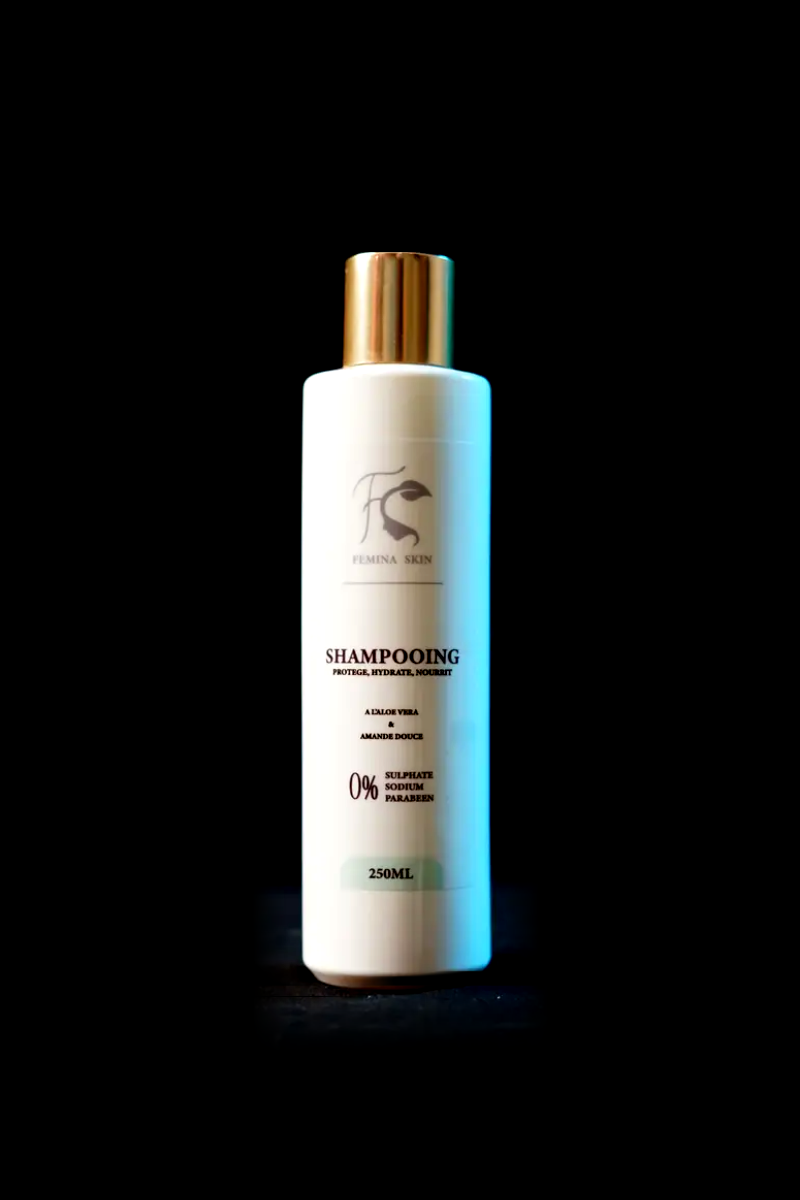 Sulphate Free ShampooFor dry hair. 0% sulphate, sodium, parabenMAD 75
What a sulfate is, and why it is left out
Sulfates, the best known being sodium lauryl sulfate, are powerful, inexpensive cleansing agents that produce the rich lather we are used to. They clean well, but they cannot tell dirt from the natural oils that protect the strand: they remove both.
On very oily hair that is not necessarily a problem. On dry, curly or coloured hair, it explains the tight feeling after washing and how quickly dullness returns.
How to wash with a sulfate-free shampoo
- Wet your hair thoroughly: a sulfate-free shampoo needs more water to spread.
- Use a little more product than usual.
- Massage your scalp with your fingertips, not your nails, for one to two minutes.
- Wash a second time if needed: the second wash is the one that cleans, the first one loosens.
The adjustment period
If you are coming from a very foamy shampoo, the first washes may leave hair heavier or less squeaky to the touch. That is normal: a scalp used to being stripped overproduces sebum to compensate, and it needs about two weeks to find its rhythm again. Do not judge before then.
And on coloured hair?
Yes, and it is one of its best uses. Sulfates speed up colour loss, so going without them makes colour last longer. For the same reason it is recommended after straightening or any chemical treatment.
What it does not do
A sulfate-free shampoo does not repair damaged hair or stop hair loss. It washes more gently, and it keeps washing from becoming one more cause of the problem. Repair is a mask's job, and hair loss that lasts is a matter for a doctor.
How to tell whether your shampoo contains sulfates
Turn the bottle over and read the ingredient list. The names to look for usually end in 'sulfate': sodium lauryl sulfate (SLS), sodium laureth sulfate (SLES), ammonium lauryl sulfate. The earlier the name appears in the list, the higher its proportion.
The words 'natural' or 'with plants' on the front say nothing about this. Only the list on the back settles it.
Why lather is not a sign of cleanliness
We link lather with cleanliness because advertising taught us to, not because the two are really connected. Lather is a by-product of surfactants, and washing happens whether it appears or not. The proof is simple: hair comes out clean.
What about dandruff?
If dandruff comes from a dry scalp, switching to a gentler shampoo helps more often than not. If it is oily, yellowish and sticky, it is probably seborrhoeic dermatitis, which needs a medicated shampoo from the pharmacy. The two should not be confused, and a cosmetic shampoo does not treat the second.
Sulfate-free shampoo and hard water
Water in many Moroccan cities is hard, meaning rich in calcium and magnesium. That makes any shampoo lather less and leaves a deposit on the strand, and you feel it more with a sulfate-free one.
The answer is not to go back to sulfates, but a final cold rinse, a second wash when needed, and a mask once a week. If your water is very hard, a simple shower filter makes a clear difference.
Frequently asked questions
Can I use it every day? Yes, that is exactly what it is made for. Its gentleness is what makes frequent washing possible without tiring the scalp.
Do I need conditioner afterwards? Yes. Conditioner works on the lengths, shampoo on the scalp: two different jobs, and neither replaces the other.
Is it suitable for oily hair? Yes, and it often reduces oiliness over time: a scalp that is no longer stripped stops overcompensating.
How often to wash your hair
There is no universal number, but there is a principle: wash when your scalp needs it, not by the calendar. Fine hair with an oily scalp may need washing every other day, coily hair once a week, and both are normal.
A sulfate-free shampoo makes frequent washing possible without harshness, which is exactly its point: it changes the question from 'can I wash often?' to 'do I need to today?'
Storing the bottle, and spotting a product that has gone off
Keep it closed, out of direct light, and do not let water get into the bottle. A shampoo that changes smell, separates into layers or becomes noticeably runnier has gone off, and should be replaced rather than shaken.
Children and treated hair
A gentle shampoo naturally suits children, but check the fragrance and whether it contains essential oils before using it on them. On chemically straightened or keratin-treated hair, sulfate-free is generally recommended because it makes the treatment last longer.
Sulfate-free, soap-free, natural: three different things
These three labels are used as if they meant the same thing, and they do not. 'Sulfate-free' means certain cleansing agents are absent, nothing more. 'Soap-free' refers to a pH suited to hair. 'Natural' has no legal definition in cosmetics and can appear on almost any bottle.
Only the list on the back gives the answer. The rest is marketing.
Available to order across every city in Morocco, with cash on delivery and fast shipping.